Choosing the right hearing aid can significantly improve your quality of life, but with various options available, many people are unsure whether to choose an analog or digital hearing aid.
While both devices are designed to amplify sound and help individuals with hearing loss hear better, they differ greatly in terms of technology, sound quality, customization, and overall performance.
If you're considering hearing aids in Guntur, understanding the difference between analog and digital hearing aids can help you make an informed decision that suits your hearing needs and lifestyle.
What Are Analog Hearing Aids?
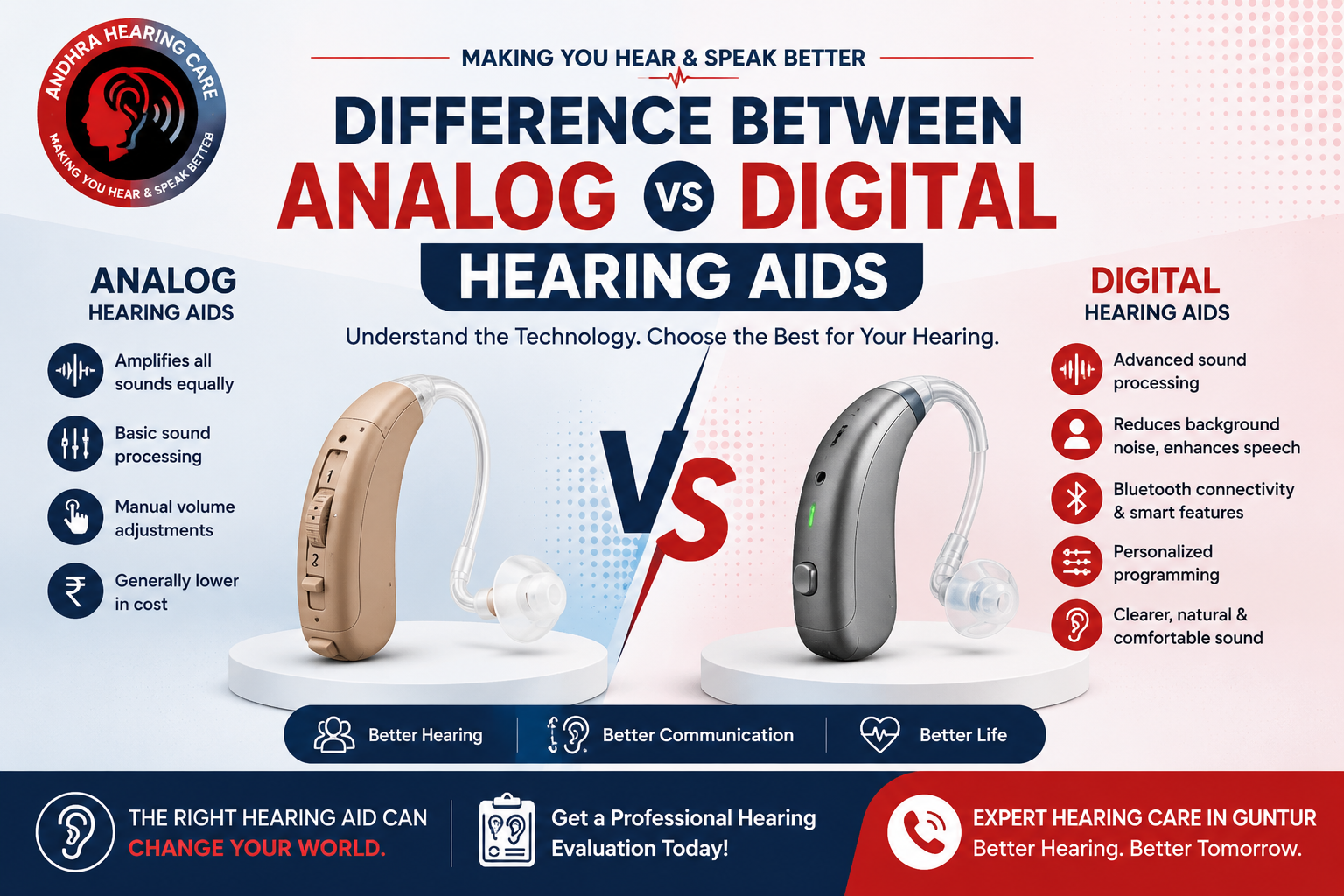
Analog hearing aids are the traditional form of hearing aids. They work by amplifying all sounds in the environment equally and converting sound waves into electrical signals before delivering them to the ear.
In simple terms, analog hearing aids make all sounds louder, regardless of whether they are speech, background noise, or environmental sounds.
Features of Analog Hearing Aids
- Amplify all sounds equally
- Basic sound processing
- Manual volume adjustments
- Lower technology compared to digital devices
- Generally less expensive
Although analog hearing aids are still available in some markets, they have become less common as digital technology has advanced significantly.
What Are Digital Hearing Aids?
Digital hearing aids use advanced computer technology to process sound. Instead of simply amplifying everything, they analyze incoming sounds and adjust them based on the user's hearing needs and environment.
These devices convert sound into digital signals, allowing for precise customization and enhanced listening experiences.
Features of Digital Hearing Aids
- Advanced sound processing
- Noise reduction technology
- Speech enhancement
- Bluetooth connectivity
- Automatic environmental adjustments
- Personalized programming
Modern digital hearing aids are designed to provide clearer, more natural sound while reducing unwanted background noise.
Analog vs Digital Hearing Aids: Key Differences
1. Sound Quality
Analog Hearing Aids
Analog devices amplify all sounds equally, which means conversations and background noise are increased together.
Digital Hearing Aids
Digital devices identify speech and reduce unnecessary noise, making conversations clearer and easier to understand.
Winner: Digital Hearing Aids
2. Noise Reduction
Analog Hearing Aids
Limited ability to separate speech from background noise.
Digital Hearing Aids
Advanced noise reduction systems automatically minimize unwanted sounds such as traffic, crowds, or wind noise.
Winner: Digital Hearing Aids
3. Customization
Analog Hearing Aids
Offer limited customization options.
Digital Hearing Aids
Can be programmed according to an individual's hearing test results and preferences.
Winner: Digital Hearing Aids
4. Comfort and Listening Experience
Analog Hearing Aids
Users may find it difficult to hear comfortably in noisy environments.
Digital Hearing Aids
Automatically adjust to different listening situations, creating a more natural hearing experience.
Winner: Digital Hearing Aids
5. Connectivity Features
Analog Hearing Aids
Do not support modern connectivity features.
Digital Hearing Aids
Many models connect directly to:
- Smartphones
- Televisions
- Tablets
- Computers
Winner: Digital Hearing Aids
6. Cost
Analog Hearing Aids
Usually more affordable due to simpler technology.
Digital Hearing Aids
Generally cost more because of advanced features and customization.
Winner: Analog Hearing Aids (for budget-conscious users)
Comparison Table: Analog vs Digital Hearing Aids
| Feature | Analog Hearing Aids | Digital Hearing Aids |
|---|---|---|
| Sound Processing | Basic | Advanced |
| Noise Reduction | Limited | Excellent |
| Speech Clarity | Moderate | High |
| Customization | Minimal | Extensive |
| Bluetooth Connectivity | No | Yes |
| Automatic Adjustments | No | Yes |
| Sound Quality | Basic | Natural & Clear |
| Cost | Lower | Higher |
Which Hearing Aid Is Right for You?
The right choice depends on your hearing condition, lifestyle, and budget.
Analog Hearing Aids May Be Suitable If:
- You have a limited budget
- You require basic sound amplification
- You prefer simple controls
Digital Hearing Aids May Be Suitable If:
- You want clearer conversations
- You spend time in noisy environments
- You prefer advanced technology
- You want smartphone connectivity
- You are looking for long-term hearing solutions
For most individuals today, digital hearing aids offer significantly better performance and overall satisfaction.
Why Digital Hearing Aids Are Becoming the Preferred Choice
Advancements in hearing technology have made digital hearing aids the industry standard.
Benefits include:
- Improved speech understanding
- Better comfort
- Reduced listening fatigue
- Enhanced communication
- Greater convenience
These advantages make digital hearing aids particularly valuable for active individuals who want a better hearing experience in all situations.
Professional Hearing Assessment Matters
Selecting a hearing aid should never be based solely on features or price.
A professional hearing evaluation can:
- Identify the type of hearing loss
- Determine its severity
- Recommend the most suitable hearing aid
- Ensure proper fitting and adjustment
If you are searching for hearing aids in Guntur, consulting hearing care professionals can help you find the best solution based on your unique hearing needs.
Frequently Asked Questions
Are analog hearing aids still available?
Yes, but they are less common today because digital hearing aids offer better sound quality and features.
Which hearing aid provides better speech clarity?
Digital hearing aids provide significantly better speech clarity due to advanced sound processing technology.
Are digital hearing aids worth the extra cost?
For most users, yes. They offer improved comfort, noise reduction, and overall hearing performance.
Can digital hearing aids connect to mobile phones?
Many modern digital hearing aids support Bluetooth connectivity and smartphone integration.
Which hearing aid is best for older adults?
The best option depends on individual hearing needs, but digital hearing aids are often recommended due to their ease of use and superior performance.
Conclusion
Both analog and digital hearing aids can improve hearing, but digital hearing aids provide a more advanced, comfortable, and personalized listening experience. While analog devices may suit those seeking a basic and affordable solution, digital hearing aids are generally the preferred choice for better speech clarity, noise reduction, and daily convenience.
If you are considering hearing aids in Guntur, a professional hearing assessment at Andhra Hearing Care can help determine which type of hearing aid is right for you and ensure you receive the most effective solution for your hearing needs.